Alan García
Alan Gabriel Ludwig García Pérez (Spanish pronunciation: [ˈalaŋ ɡaβˈɾjel luðˈwiɣ ɡaɾˈsi.a ]; 23 May 1949 – 17 April 2019)[2] was a Peruvian politician who served as President of Perufrom 1985 to 1990 and again from 2006 to 2011.[3] He was the second leader of thePeruvian Aprista Party and the only party member ever to have served as President. His first term was marked by a severe economic crisis, social unrest and violence. He ran unsuccessfully for the presidency in 2001, losing in a run-off to Alejandro Toledo.[4] He ran again in 2006 and was elected to a second term, even though his first term in the 1980s was considered by many to have been disastrous. During García's second term, due to the increase in global metal prices, Peru averaged seven percent GDP growth a year, held inflation below three percent annually and accumulated foreign exchange reserves worth US$47 billion; however, his tenure also resulted in increased environmental damage, according to critics, and increased social conflict, according to the national human rights ombudsman's office. On 17 April 2019, García shot himself as police officers were preparing to arrest him over matters relating to the Odebrecht scandal; he died hours later.[5]
Early lifeBorn in the American Clinic of the Barranco District into a middle-class family, García met his father for the first time when he was five years old, due to his father's imprisonment for being a member of the Peruvian Aprista Party.[6] His mother founded the party's base in the Camaná Province of the Arequipa Region. From a very young age, he accompanied his father in party meetings and became acquainted with future leaders of theAmerican Popular Revolutionary Alliance(APRA),[7] such as Luis Alva Castro andMercedes Cabanillas. At the age of 14, he was already an immensely talented orator when he first gave a speech in honour of party founderVíctor Raúl Haya de la Torre, whom he admired and followed until his death.[6] García studied law, first at the Pontifical Catholic University of Peru and later earning a law degree from the National University of San Marcos in 1971.[8] A year later, he left Peru for Spain, where he studied for a PhD in law. For years García claimed to have earned a PhD; in 2014, however, documents from the university proved he never finished his PhD.[9] In 1974, he travelled to France with other members of the APRA to study at the prestigious University of Paris I.[6] After earning a degree in sociology, he was called by Víctor Raúl Haya de la Torre to come back to Peru in order to run for the Constituent Assembly election in 1978. García was elected a Member of the Assembly, where he impressed his colleagues with his oratory and skillful rhetoric.[6]As APRA's Secretary of Organization, he was assigned to conduct the party's public affairs in the wake of Haya de la Torre's death in 1979.[7] From his first marriage, García had one daughter, Carla, who is also active in Peruvian politics.[10] With his second wife Pilar Nores, from whom he separated in 2010,[11] García had four children.[10] He also had another child from an extramarital affair with a woman named Roxanne Cheesman.[12] Already recognized as a young leader with a bright future for the country, he was elected toCongress in 1980.[7] Two years later, he was elected General Secretary of the Peruvian Aprista Party. He was elected as to serve as President of the Republic in the 1985 general elections.[7] First presidencyAlan García won the presidential election on 14 April 1985 with 45% of the votes. Since he did not receive the 50% of the votes required for a first-round victory, a run-off was scheduled between him and Alfonso Barrantes (the former mayor of Lima) of the United Left party. Barrantes, however, withdrew and decided not to enter the run-off, saying he did not want to prolong the country's political uncertainty. García was thus declared President on 1 June and officially took power on 28 July 1985. For the first time in its sixty-year history, the APRA party came to power in Peru. Aged 36, García was dubbed "Latin America's Kennedy", becoming the region's youngest president at the time,[7] and the second youngest president in Peruvian history (the youngest was Juan Crisostomo Torricoin 1842, aged 34). Despite his initial popularity among voters, García's term in office was marked by bouts of hyperinflation, which reached 7,649% in 1990[7] and had a cumulative total of 2,200,200% over the five years, which profoundly destabilised the Peruvian economy. Owing to this chronic inflation, the Peruvian currency, the sol, was replaced by the inti in mid-1985, which itself was replaced by the nuevo sol ("new sun") in July 1991, at which time the new sol had a cumulative value of one billion (1,000,000,000) old soles. During García's administration, the per capita annual income of Peruvians fell to US$720 (below the level of 1960) and Peru's GDP dropped 20%. By the end of his term, national reserves were US$900 million in the red. According to studies by the National Institute of Statistics and Informatics and the United Nations Development Programme,[13] around the start of his presidency, 41.6% of Peruvians lived in poverty. During his presidency, this percentage increased by 13% (to 55%) in 1991. García also made an attempt to nationalise the banking and insurance industries. The International Monetary Fund and the financial community recoiled after García's administration unilaterally declared a limit on debt repayment equal to 10% of theGross National Product, thereby isolating Peru from the international financial markets. The economic turbulence exacerbated social tensions and contributed in part to the rise of the violent Maoist rebel movement known as the Shining Path, which launched the internal conflict in Peru and began attacking electrical towers, causing a number of blackouts in Lima. The period also saw the emergence of the Túpac Amaru Revolutionary Movement(MRTA).[14] The García administration unsuccessfully sought a military solution to the growing terrorism, allegedly committing human rights violations, which are still under investigation. These include the Accomarca massacre, where 47 campesinos were gunned down by armed forces in August 1985,[15] the Cayara massacre (May 1988) in which some thirty people were killed and dozens disappeared,[16] and the summary execution of more than 200 inmates during prison riots in Lurigancho, San Juan Bautista (El Frontón) and Santa Bárbara in 1986.[17][18] According to an official inquiry, an estimated 1,600 forced disappearances took place during García's presidency. His own personal involvement in these events is not clear. García was allegedly tied to the paramilitary Rodrigo Franco Command, which is accused of carrying out political murders in Peru during García's presidency. A U.S. declassified report, written in late 1987, said that García's party, APRA, and top government officials were running a paramilitary group, responsible for the attempted bombing of the El Diario newspaper, then linked to Shining Path, had sent people to train in North Korea and may have been involved in executions.[19] According to investigative journalist Lucy Komisar, the report made it clear that it believed García had given the orders.[19] His presidency left the country with hyperinflation, isolated from the international financial community, with negative reserves of US$900 million, continuous subversive activities by the Shining Path, a great increase in poverty levels and a multimillion-dollar investment in an electric train in Lima that was not finished during his first government, and was still under construction in 2011. His critics claim many poor decisions he made created an environment that led to the rise of Alberto Fujimori, the authoritarian leader who followed him on office. García was accused of multiple charges of corruption during Fujimori's government, during which he remained overseas. Investigations were abandoned and archived without verdict and the statute of limitations has expired.[citation needed] His economic policies were used by economists Rudi Dornbusch and Sebastian Edwards to coin the term macroeconomic populism.[20] Post-presidencyuestion_book-new.svg" class="image" style="text-decoration: none; color: rgb(11, 0, 128); background: none;">  | |
In 1992, García went into exile in Colombia and later in France after Fujimori's self-coupduring which the military raided his house. The new government re-opened charges against him for corruption. He denied the charges, and in 2001 the Supreme Court ruled that the statute of limitations had run out following a recommendation by the Inter-American Court of Human Rights.[21] His long-time ally Jorge del Castillo represented him as his lawyer and performed very heavy lobbying to allow García to legally return to Peru. After Del Castillo was elected to Congress, he had much more leverage for García's defence. The main accuser of the former president, Congressman Fernando Olivera, left Peru after Fujimori's fall.[citation needed] Fernando Olivera still follows his accusations against García and remains an avid critic. After living eight years and ten months in neighbouring Colombia and in France, he returned to Peru in 2001,[7] following the fall of Fujimori's government. As had been rumoured for many years, García ran for president in the new elections called by interim president Valentín Paniagua, with Jorge del Castillo as his campaign manager. García competed against some of his harshest critics and worst political enemies, includingLourdes Flores Nano and Fernando Olivera.[7] His campaign election theme was that he was the most experienced candidate and thus the most prepared, as he had made mistakes before as President, and had learned from them. He attributed the problems of the Peruvian economy in his first presidency to the economic problems of Argentina and Brazilat the time. He distanced himself from accusations that he had been protected by Fujimori during his exile, and he would switch the topic when he was asked about his endorsement of Fujimori in the 1990 election.[citation needed] He finished a distant second in the first round, far behind Alejandro Toledo, but just slightly above Flores Nano (by 1%), enough to take him to a run-off, as Toledo had failed to obtain the 50% majority. During the campaign for the run-off Toledo's popularity decreased, while García's popularity increased with his characteristic rhetoric and classical oratory delivery, which had helped him to get elected in 1985. García managed to obtain 48% of the vote in the run-off, losing to Toledo by a very tight margin. This was despite the movement "Voto Nulo" ("blank" or void vote), led by Jaime Bayly, a popular writer and TV presenter, and Álvaro Vargas Llosa, son of the famous novelist, in which celebrities asked voters to vote for neither candidate and instead intentionally damage their vote cards or leave them blank. After the 2001 election, García, as leader of the APRA party, became Leader of the Opposition.[7] eru_2006_2nd_Rnd.png" class="image" style="text-decoration: none; color: rgb(11, 0, 128); background: none;">  eru_2006_2nd_Rnd.png" class="internal" title="Enlarge" style="text-decoration: none; color: rgb(11, 0, 128); display: block; text-indent: 15px; white-space: nowrap; overflow: hidden; width: 15px; height: 11px; -webkit-user-select: none; background: linear-gradient(transparent, transparent), url("data:image/svg+xml,%3Csvg xmlns=%22http://www.w3.org/2000/svg%22 width=%2215%22 height=%2211%22 viewBox=%220 0 11 15%22%3E %3Cg id=%22magnify-clip%22 fill=%22%23fff%22 stroke=%22%23000%22%3E %3Cpath id=%22bigbox%22 d=%22M1.509 1.865h10.99v7.919H1.509z%22/%3E %3Cpath id=%22smallbox%22 d=%22M-1.499 6.868h5.943v4.904h-5.943z%22/%3E %3C/g%3E %3C/svg%3E");"> Geographic distribution of second-round votes, by winning candidate. Alan García, >2/3 of valid votes Alan García, <2/3 of valid votes Ollanta Humala, >2/3 Ollanta Humala, <2/3 García officially started his campaign for the April 2006 presidential election in Lima on 20 April 2005. Ollanta Humalawon the first round with 32.50% of the valid votes, followed by García, who got 24.32% (against Lourdes Flores' 23.81%). As no candidate won a majority, a run-off election was held on 4 June 2006 between Humala and García. Preliminary official results gave García an advantage over his run-off opponent, who conceded defeat.[7] On 28 April 2006, prior to the run-off, García had become involved in a dispute with Venezuelan  resident Hugo Chávez. For the second time in a Peruvian presidential elections, Chávez declared his support for Ollanta Humala, García's opponent, and referred to García as a "robber", a "bandit", and "the Carlos Andrés Pérez of Peru". In response, García stated that Chávez was "not acting as a statesman" and challenged Chávez to a debate to be hosted by CNN. García called on the Organization of American States to intervene in the matter.[22][23] resident Hugo Chávez. For the second time in a Peruvian presidential elections, Chávez declared his support for Ollanta Humala, García's opponent, and referred to García as a "robber", a "bandit", and "the Carlos Andrés Pérez of Peru". In response, García stated that Chávez was "not acting as a statesman" and challenged Chávez to a debate to be hosted by CNN. García called on the Organization of American States to intervene in the matter.[22][23] On 31 May 2006, a few days before the run-off election, García's economic adviser Enrique Cornejo told the media that if García won in the second round, his government would renew a US$422 million aid package with the International Monetary Fund.[24] Anoop Singh, the IMF's Western Hemisphere Director, responded positively by saying he was "impressed by the vision of the president-elected for Peru, especially his commitment to applying prudent economic policy."[25] Second presidency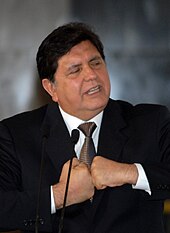 Alan García in Brasilia right after winning his second presidency. On 28 July 2006, García was sworn in as president, after winning approximately 53% of the nationwide vote in the elections held on 4 June.[7] He won in the capital city, Lima, and the northern coast, a geographical base of the APRA party, but lost on the southern region (mostly impoverished but including major cities such as Cuzco and Arequipa) and the rainforest areas, considered Humala's strongholds. A third of the voters said that voting for him was "voting for the lesser of two evils": although many Peruvians had a very negative impression of García after his first term, they were frightened by rumours that Humala would create a government based on Fidel Castro's Cuba and would turn Hugo Chávez, President of Venezuela, into the virtual ruler of Peru, due to Chavez's patronage of Humala's party. These fears were accompanied by declarations of militarization, the re-introduction of the death penalty and criminalization and disrespect for LGBT communities. Humala denied these rumours, but his conflicting statements about his government's vision and Chávez's strong campaigning for him created enough suspicions among voters to cost him the ballotage. With 36 seats, APRA was the second largest bloc in the 120-seat unicameral Congresswhich was sworn in a couple of days before the President. With 45 seats, Humala's Union for Peru arty was the largest bloc, although it divided itself up into three factions.[26] On 28 June, one month before García was sworn in, his party gave 25 of the 79 votes (almost one third of the votes) that ratified the Peru–United States Trade Promotion Agreement in the Peruvian Congress, one month prior to the new legislature that included the Union for Peru congressmen, who opposed the agreement with the USA. The US Congress ratified the agreement on 4 December 2007 and it came into effect on 1 February 2009.[27] In his first speech as President, García said he would appoint a Finance Minister who was neither "an orthodox market liberal" nor a person "excessively in favour of state intervention in the economy". The position of Prime Minister was given to Jorge del Castillo. According to the BBC, in private interviews García had stated his interest in a possible future trade agreement with Brazil and considered himself "an admirer" of Brazilian President Lula da Silva.[28] In press conferences with the foreign press, García acknowledged that the support Humala received in the election "could not be ignored". García, in a recognition of future domestic politics with a UPP controlled Congress, was quoted as saying "Mr. Humala is an important political figure, and a President should consult with different political factions".[28] However, Humala said he wouldn't salute the winner personally, adding that "he and his party will constitute the principal opposition bloc, not to fight Mr. García, but to defend the interests of the State and watch the government".[29] President Chávez of Venezuela responded to García's comments on his show Aló Presidente by stating that it was García who owed him an apology saying "the only way relations between the two countries can be restored is if Peru's elected President [García] gives an explanation and offers an apology to the Venezuelan people. He started throwing stones". Chávez questioned the legitimacy of the election, citing 1.2 million invalid ballots and a margin of victory of 600,000 votes, although offering no evidence for his comments.[30] García, attending an invitation to meet Brazilian president Lula da Silva, responded to Chávez: "Accept your defeat in silence. Don't ask me to apologize for something arising from interference and remarks that are unacceptable under international law."[31] Differences with Chávez were left behind after the two ended their controversy at the II South American Community of Nations Summit.[32][33] On 20 July 2006, García named Luis Carranza as Finance Minister, a former executive atSpain-based Banco Bilbao Vizcaya Argentaria and Central Bank director and deputy finance chief from August 2004 to August 2005 in Alejandro Toledo's government. The appointment was welcomed by some detractors of García's fiscal policies during his first administration. But Mario Huamán Rivera, the President of the Confederación General de Trabajadores del Perú (General Workers Confederation of Peru), the country's largesttrade union, attacked the appointment stating that "it looks as though Alan García is not going to fulfill his promise to change economic policy".[34][35] On the day before his inauguration, García formally named his cabinet including former Secretary-General of the APRA party and re-elected Congressman Jorge del Castillo as Prime Minister, Luis Carranza as Minister of Finance and Economy, and José Antonio García Belaúnde as Foreign Affairs Minister.[36] García was inaugurated as President on 28 July 2006.[37] During his campaign, García declared that he supported the death penalty for rapists of minors;[38] he has repeated this stance while in office pushing a law on the matter, which would modify the Criminal Code.[39] Although the issue seemed to be stalled, García widened the range of his proposal for the death penalty, by including terrorists in the list of those who could receive it.[40][41] García faced his first major political defeat of his second term in office on 11 January 2007 when his proposal to introduce the death penalty as a punishment for captured Shining Path rebels was rejected by Congress in a vote of 49 to 26. García had promised to introduce the death penalty for Shining Path rebels during the 2006 Presidential election. Following the defeat of the proposal, García suggested a national referendum on the issue but it was blocked by Congress. Legislators who voted against the bill stated that it would be a breach of the American Convention on Human Rights to which Peru is a signatory. Approximately 3000 supporters of the proposal marched in Lima holding up photos of victims of attacks by the Shining Path.[42] On 5 June 2009, García ordered police and military forces to stop Amazonian Indigenous protesters from blocking roads in the Bagua region. They had been demonstrating against the signing by Alan García of special decrees that allowed foreign corporations to enter Indigenous lands for oil drilling, mining and logging. As a result of the protests and armed military incursion, more than 100 native civilians[43] and 14 policemen were killed.[44] The government claimed, in a redacted television commercial, that several policemen were killed after being taken prisoner,[45] while protesters claimed the bodies of the murdered amazon Natives have been dumped into the river.[46][47] With the passage of time, studies of human rights violations in Peru have discovered a close relationship between García and the forces within Peru who promote impunity for human rights violators. García was involved in colonizing the bench by placing inside the judiciary judges who would be sympathetic to perpetrators of human rights violations. Additionally, García was supportive of efforts to punish judges who handed down indictments of perpetrators. García himself was in the presidency during many gross violations of human rights and he has been quite hostile to human rights organizations and to judicial actors who seek justice for victims of human rights violations. During his presidency García sought to tilt the legal playing field in favour of the military and against victims. He also tried to make life difficult for NGOs seeking to help victims. For example, he offered extensive resources to defendants and military officers while creating new laws that would make it difficult for human rights NGOs to do their jobs, receive necessary resources, and pursue the advance of judicial action that attempted to bring human rights violators to justice.[48] Foreign affairsmitry_Medvedev_in_Peru_24-25_November_2008-7.jpg" class="image" style="text-decoration: none; color: rgb(11, 0, 128); background: none;">  mitry_Medvedev_in_Peru_24-25_November_2008-7.jpg" class="internal" title="Enlarge" style="text-decoration: none; color: rgb(11, 0, 128); display: block; text-indent: 15px; white-space: nowrap; overflow: hidden; width: 15px; height: 11px; -webkit-user-select: none; background: linear-gradient(transparent, transparent), url("data:image/svg+xml,%3Csvg xmlns=%22http://www.w3.org/2000/svg%22 width=%2215%22 height=%2211%22 viewBox=%220 0 11 15%22%3E %3Cg id=%22magnify-clip%22 fill=%22%23fff%22 stroke=%22%23000%22%3E %3Cpath id=%22bigbox%22 d=%22M1.509 1.865h10.99v7.919H1.509z%22/%3E %3Cpath id=%22smallbox%22 d=%22M-1.499 6.868h5.943v4.904h-5.943z%22/%3E %3C/g%3E %3C/svg%3E");"> García with President of Russia Dmitry Medvedev in Lima on 24 November 2008 eaders_of_TPP_member_states.jpg" class="image" style="text-decoration: none; color: rgb(11, 0, 128); background: none;"> 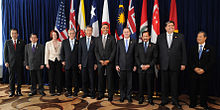 eaders_of_TPP_member_states.jpg" class="internal" title="Enlarge" style="text-decoration: none; color: rgb(11, 0, 128); display: block; text-indent: 15px; white-space: nowrap; overflow: hidden; width: 15px; height: 11px; -webkit-user-select: none; background: linear-gradient(transparent, transparent), url("data:image/svg+xml,%3Csvg xmlns=%22http://www.w3.org/2000/svg%22 width=%2215%22 height=%2211%22 viewBox=%220 0 11 15%22%3E %3Cg id=%22magnify-clip%22 fill=%22%23fff%22 stroke=%22%23000%22%3E %3Cpath id=%22bigbox%22 d=%22M1.509 1.865h10.99v7.919H1.509z%22/%3E %3Cpath id=%22smallbox%22 d=%22M-1.499 6.868h5.943v4.904h-5.943z%22/%3E %3C/g%3E %3C/svg%3E");"> Leaders of the Trans-Pacific Partnership member states in 2010 After being elected, in the months prior to his inauguration, García sought to heal the relationship with Chile, which was stressed by the differences between the governments of Alejandro Toledo and Ricardo Lagos and severely impaired by former President Alberto Fujimori's extradition affair.[49] García's intentions were well received by Michelle Bachelet, President of Chile, as she and García met and struck some preliminary agreements.[50][51] These conversations eventually led to the final draft of a landmark economic agreement with Chile a month after García was sworn in.[52][53] On 9 November 2006, three months after being elected, García signed 12 commercial agreements with PresidentLuiz Inácio Lula da Silva of Brazil,[54][55] strengthening the relationship between the two countries. As part of the IIRSAprogramme and continuing integration efforts – including the August 2006 negotiations between Petrobras andPetroperú[56] – these new agreements sought to further bilateral cooperation.[57] García offered Peruvian hydropower to meet Brazil's growing energy needs, although further details were not disclosed.[58] Second Post-Presidency and fourth presidential campaignuestion_book-new.svg" class="image" style="text-decoration: none; color: rgb(11, 0, 128); background: none;"> | |
García left office on 28 July 2011, with a 42% popular approval rating. He became one ofOllanta Humala's harshest critics, leading the opposition, jointly with Keiko Fujimori. Aside from politics, García has served as Director of the Institute of Government and Public Administration of the Universidad de San Martín de Porres in Lima, appointed by his former Minister of Education, José Antonio Chang, the university's president. After years of media speculation that García would seek a third term as President, he officially launched his campaign on 30 October 2015. In December 2015, after a mutual agreement with his former arch-rival Lourdes Flores, he announced that he would run allied with the Christian People's Party, naming the coalition the Popular Alliance. The election's exit polls gave García 6% of the popular vote, without a chance to make it to the runoff, which eventually took place between Pedro Pablo Kuczynski and Keiko Fujimori. He tendered his resignation as President of the Peruvian Aprista Party on 11 April 2016, after 12 years in the position. He has called for the renovation of the party, reaffirmingVíctor Raúl Haya de la Torre's legacy and ideology to the youth. Odebrecht scandalRESIDENTES_DEL_PER%C3%9A_Y_BRASIL_DURANTE_ENCUENTRO_EN_MANAOS,_EN_QUE_SE_FIRMARON_12_ACUERDOS_DE_INTEGRACI%C3%93N_Y_COOPERACI%C3%93N_(4707920134).jpg" class="image" style="text-decoration: none; color: rgb(11, 0, 128); background: none;">  RESIDENTES_DEL_PER%C3%9A_Y_BRASIL_DURANTE_ENCUENTRO_EN_MANAOS,_EN_QUE_SE_FIRMARON_12_ACUERDOS_DE_INTEGRACI%C3%93N_Y_COOPERACI%C3%93N_(4707920134).jpg" class="internal" title="Enlarge" style="text-decoration: none; color: rgb(11, 0, 128); display: block; text-indent: 15px; white-space: nowrap; overflow: hidden; width: 15px; height: 11px; -webkit-user-select: none; background: linear-gradient(transparent, transparent), url("data:image/svg+xml,%3Csvg xmlns=%22http://www.w3.org/2000/svg%22 width=%2215%22 height=%2211%22 viewBox=%220 0 11 15%22%3E %3Cg id=%22magnify-clip%22 fill=%22%23fff%22 stroke=%22%23000%22%3E %3Cpath id=%22bigbox%22 d=%22M1.509 1.865h10.99v7.919H1.509z%22/%3E %3Cpath id=%22smallbox%22 d=%22M-1.499 6.868h5.943v4.904h-5.943z%22/%3E %3C/g%3E %3C/svg%3E");"> García in 2010 with Brazilian president Luiz Inácio Lula da Silva, who is currently serving 12 years in prison on corruption charges. In 2016 and 2017, five of his former ministers were accused of corruption by the Peruvian justice system:Yehude Simon (Prime Minister), Rosario Fernández(Minister of Justice), Mercedes Cabanillas (Minister of the Interior), Ántero Flores Aráoz (Minister of Defence) andLuis Nava (Minister of Production).[59] In November 2018, García was banned from leaving Peru by the court as a result of Odebrecht scandal investigation involving Brazil's construction company Odebrecht. He entered the residence of the Uruguayan ambassador on 17 November, requesting asylum. However, on 3 December his request was denied, and he subsequently left the ambassador's residence.[60] The scandal has also led to the arrest or requests for the extradition of former presidentsKuczynski, Humala and Toledo.[61] DeathOn the morning of 17 April 2019, García shot himself in the temple as he was being presented with a preliminary arrest warrant related to investigations for corruption and bribes he allegedly received from a Brazilian construction corporation. Initial reports stated that officers violated protocol allowing García to be alone to speak to his lawyer, resulting in the incident. He died later from his self-inflicted injuries.[62][5][63] Public imageGarcía was 2008 Latin Business Chronicle's "leader of the year"; Peru was ranked as Latin America's third-best country for business.[64][65] Electoral historyParliamentary elections (1978–1980)1978 Constituent Assembly election | Party | Votes | % |
|---|
| Peruvian Aprista Party | 1,240,674 | 35.4 | | Christian People's Party | 835,285 | 23.8 | | Worker Peasant Student and Popular Front | 433,413 | 12.3 | | Revolutionary Socialist Party | 323,520 | 6.6 | | Peruvian Communist Party | 207,612 | 5.9 | | Popular Democratic Unity | 160,741 | 4.5 | | National Front of Workers and Peasants | 135,552 | 3.8 | | Christian Democratic Party | 83,075 | 2.3 | | National Union Party | 74,137 | 2.1 | | Pradist Democratic Movement | 68,619 | 1.9 | | Socialist Revolutionary Action | 20,164 | 0.5 | | Reformist Democratic Party | 19,594 | 0.5 | | Invalid/blank votes | 661,576 | – | | Total | 4,172,962 | 100 | | Registered voters/turnout | 4,978,831 | 83.7 | | Source: Nohlen |
Congress of the Republic of Peru, Lima, 1980 - Francisco Belaúnde Terry (Popular Action) - 579,263 (39.166%)
- Alan García Pérez (Peruvian Aprista Party) - 333,901 (22.576%)
- Roberto Ramírez del Villar (Christian People's Party) - 223,161 (15.089%)
- Javier Diez Canseco (Popular Democratic Unity) - 70,496 (4.766%)
- Hugo Blanco (Workers' Revolutionary Party) - 70,190 (4.746%)
- Manuel Dammert Ego-Aguirre (Revolutionary Left Union) - 62,607 (4.233%)
- Antonio Meza-Cuadra (Unity of the Left) - 58,325 (3.944%)
- Luis Alberto Delgado Bejar (National Front of Workers and Peasants) - 19,731 (1.334%)
- César Passalacqua Pereyra (Worker Peasant Student and Popular Front) - 18,002 (1.217%)
- Raúl Beraún Schreiber (National Union) - 10,791 (0.730%)
- Ismael Frías Torrico (Political Organisation of the Peruvian Revolution) - 8,531 (0.577%)
- Alejandro Tudela Garland (Pradist Democratic Movement) - 5,425 (0.367%)
- Carlos Yumi Matsushiro (Independent List Nisei Civic Movement) - 5,257 (0.355%)
- Miguel Campos Arredondo (Socialist Political Action) - 4,405 (0.298%)
- Víctor Villavicencio Mendizabal (Progressive and Social Integration Party) - 3,664 (0.248%)
- Rogelio Escalante Peláez Socialist Party of Peru - 2,363 (0.160%)
- Vicente López Mesías (Independent List Province of Lima) - 1,659 (0.112%)
- Juan de Dios Cayo Muñoz (Independent List Popular Cooperation) - 1,242 (0.084%)
Presidential elections (1985–2016)1985 presidential election | Candidate | Party | Votes | Percentage |
|---|
| Alan García Pérez | Peruvian Aprista Party | 3,457,030 | 53.110% | | Alfonso Barrantes Lingán | United Left | 1,606,914 | 24.687% | | Luis Bedoya Reyes | Democratic Convergence | 773,705 | 11.886% | | Javier Alva Orlandini | Popular Action | 472,627 | 7.261% | | Roger Cáceres Velásquez | National Left | 91,986 | 1.413% | | Francisco Morales Bermúdez | Democratic Front of National Unity | 54,560 | 0.838% | | Jorge Campos Arredondo | National Progressive Party | 26,757 | 0.411% | | Ricardo Napurí Schapiro | Socialist Workers Party | 15,607 | 0.240% | | Peter Uculmana | National Civic Movement 7th June | 10,020 | 0.154% | | Invalid/blank votes | 1,047,976 | – | | Total | 7,557,182 | 100 | | Registered voters/turnout | 8,341,734 | 90.595% | | Source: Infogob |
2001 presidential election | Candidate | Party | First round | Second round |
|---|
| Votes | % | Votes | % |
|---|
| Alejandro Toledo | Possible Peru | 3,871,167 | 36.515% | 5,548,556 | 53.079% | | Alan García Pérez | Peruvian Aprista Party | 2,732,857 | 25.777% | 4,904,929 | 46.921% | | Lourdes Flores | National Unity | 2,576,653 | 24.304% | | | Fernando Olivera | Independent Moralizing Front | 1,044,207 | 9.849% | | Carlos Boloña | People's Solution | 179,243 | 1.691% | | Ciro Gálvez | Andean Renaissance | 85,436 | 0.806% | | Marco Arrunategui | Project Country | 79,077 | 0.746% | | Ricardo Noriega | All for Victory | 33,080 | 0.312% | | Invalid/blank votes | 1,662,629 | – | 1,675,484 | – | | Total | 12,264,349 | 100 | 12,128,969 | | Registered voters/turnout | 14,906,233 | 82.277% | 14,906,233 | 81.368% | | Source: Infogob |
2006 presidential election eruvian_presidential_election,_2006&action=edit" style="text-decoration: none; color: rgb(102, 51, 102); padding: 0px !important; background: none !important;">e • eruvian_presidential_election,_2006" title="Template talk eruvian presidential election, 2006" style="text-decoration: none; color: rgb(11, 0, 128); background: none;">d Summary of the 9 April and 4 June 2006 Peruvian presidential election results eruvian presidential election, 2006" style="text-decoration: none; color: rgb(11, 0, 128); background: none;">d Summary of the 9 April and 4 June 2006 Peruvian presidential election results| Candidates - Parties | Votes 1st round | % (Valid Votes) | Votes 2nd round | % (Valid Votes) |
|---|
| Ollanta Humala Tasso - Union for Peru (Unión por el Perú) | 3,758,258 | 30.616 | 6,270,080 | 47.375 | | Alan García Pérez - Peruvian Aprista Party (Partido Aprista Peruano) | 2,985,858 | 24.324 | 6,965,017 | 52.625 | | Lourdes Flores Nano - National Unity (Unidad Nacional) | 2,923,280 | 23.814 | - | - | | Martha Chávez Cossio - Alliance for the Future(Alianza por el Futuro) | 912,420 | 7.433 | - | - | | Valentín Paniagua Corazao - Center Front (Frente de Centro) | 706,156 | 5.753 | - | - | | Humberto Lay Sun - National Restoration(Restauración Nacional) | 537,564 | 4.379 | - | - | | Susana Villarán - Decentralization Coalition(Concertación Descentralista) | 76,105 | 0.620 | - | - | | Jaime Salinas - National Justice (Justicia Nacional) | 65,636 | 0.535 | - | - | | Javier Diez Canseco - Socialist Party (Partido Socialista) | 60,955 | 0.497 | - | - | | Natale Amprimo - Alliance for Progress (Alianza Para el Progreso) | 49,332 | 0.402 | - | - | | Pedro Koechlin Von Stein - With Force Peru (Con Fuerza Perú) | 38,212 | 0.311 | - | - | | Alberto Moreno - New Left Movement (Movimiento Nueva Izquierda) | 33,918 | 0.276 | - | - | | Alberto Borea - Democratic Force (Fuerza Democrática) | 24,584 | 0.200 | - | - | | Ulises Humala - Go On Country (Avanza País) | 24,518 | 0.200 | - | - | | Ciro Gálvez - Andean Renaissance (Renacimiento Andino) | 22,892 | 0.186 | - | - | | Javier Espinoza - Let's Make Progress Peru(Progresemos Perú) | 13,965 | 0.114 | - | - | | José Cardó Guarderas - Democratic Reconstruction(Reconstrucción Democrática) | 11,925 | 0.097 | - | - | | Ántero Asto - Peruvian Resurgence (Resurgimiento Peruano) | 10,857 | 0.088 | - | - | | Ricardo Wong - And It's Called Peru (Y se llama Perú) | 10,539 | 0.086 | - | - | | Luis Guerrero - Peru Now (Perú Ahora) | 8,410 | 0.069 | - | - | | Total valid (Turnout: 1st Round 88.706 %, 2nd Round 87.712 %) | 12,275,384 | 100 | 13,235,097 | 100 | | Blank | 1,737,045 | 11.872 | 157,863 | 1.091 | | Invalid | 619,574 | 4.234 | 1,075,089 | 7.431 | | Source: National Office of Electoral Processes. | 2016 presidential election | Candidate | Party | First round | Second round |
|---|
| Votes | % | Votes | % |
|---|
| Keiko Fujimori | Popular Force | 6,115,073 | 39.86 | 8,555,880 | 49.88 | | Pedro Pablo Kuczynski | Peruvians for Change | 3,228,661 | 21.05 | 8,596,937 | 50.12 | | Verónika Mendoza | Broad Front | 2,874,940 | 18.74 | | | Alfredo Barnechea | Popular Action | 1,069,360 | 6.97 | | Alan García Pérez | Popular Alliance | 894,278 | 5.83 | | Gregorio Santos | Direct Democracy | 613,173 | 4.00 | | Fernando Olivera | Hope Front | 203,103 | 1.32 | | Alejandro Toledo | Possible Peru | 200,012 | 1.30 | | Miguel Hilario | Developing Peru | 75,870 | 0.49 | | Antero Flores Aráoz | Order Party | 65,673 | 0.43 | | Invalid/blank votes | 3,393,987 | – | 1,190,079 | – | | Total | 18,734,130 | 100 | 18,342,896 | 100 | | Registered voters/turnout | 22,901,954 | 81.80 | 22,901,954 | 80.09 | | Source: Infogob |
Published worksGarcía was the author of several books on Peruvian and Latin American affairs. Most of them may be found in the National Library of Peru. His published works include the following: - 1981 A la Inmensa Mayoría: Discursos
- 1982 El Futuro Diferente
- 1987 El Desarme Financiero: Pueblo y Deuda en América Latina
- 1990 La Revolución Regional
- 1991 La Defensa de Alan García
- 1992 El Nuevo Totalitarismo
- 1994 El Mundo de Maquiavelo
- 1997 La Falsa Modernidad
- 1997 Siete Tesis Erróneas del Neoliberalismo en América Latina
- 1999 Mi Gobierno Hizo la Regionalización
- 2000 La Década Infame: Deuda Externa 1990–1999
- 2003 Modernidad y Política en el Siglo XXI: Globalización con Justicia Social
- 2005 Sierra Exportadora: Empleo, Modernidad y Justicia en Los Andes
- 2011 Contra el Temor Económico: Creer en el Perú
- 2012 Pida la Palabra: Por la Libertad, la Plenitud y el Exito
- 2012 Pizarro, el Rey de la Baraja: Política, confusión y dolor en la Conquista
- 2013 Noventa años de aprismo: Hay, hermanos, muchísimo que hacer
- 2013 Confucio y la globalización: Comprender China y crecer con ella
https://en.wikipedia.org/wiki/Alan_Garc%C3%ADa |



